Choosing the Right Tires for Sustainable Lawn Care
Choosing the right tires for your John Deere lawn tractor is crucial for more than just a smooth ride. Tire selection significantly impacts fuel efficiency, soil compaction, and the overall environmental impact of your lawn care practices. This article will delve into the key factors to consider when selecting and maintaining your tractor tires, emphasizing eco-friendly choices. For further maintenance tips, check out this guide on tractor belt replacement.
Tread Design: Balancing Traction and Soil Health
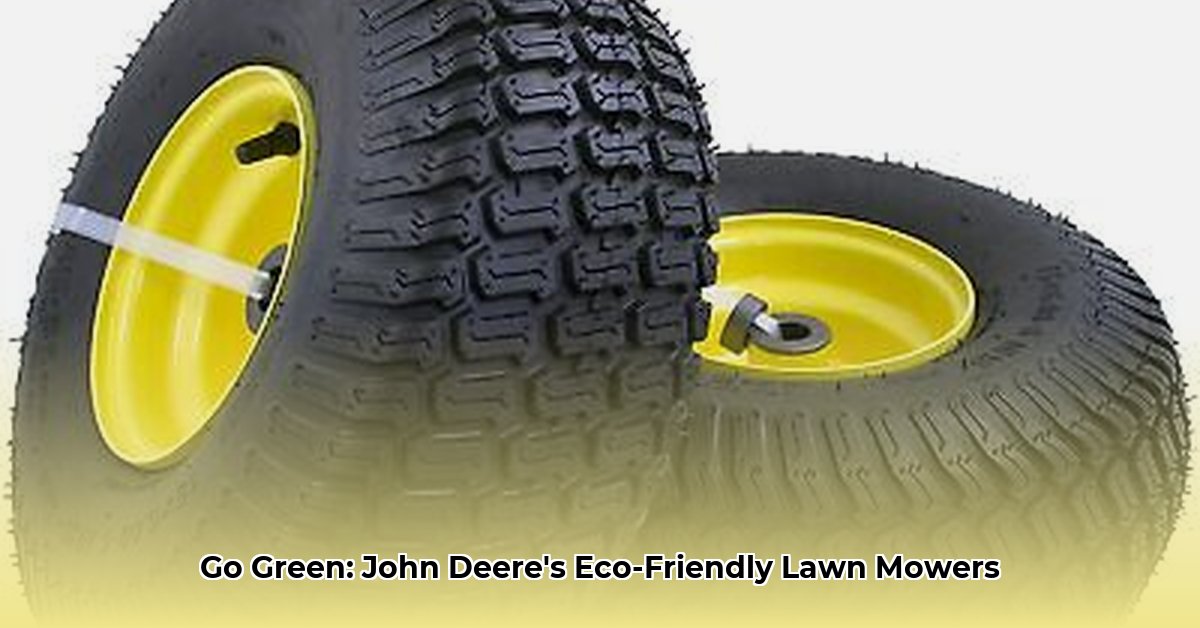
The tread pattern of your tires plays a significant role in their performance. Deep, aggressive treads provide excellent traction on uneven terrain, but they can increase soil compaction. Conversely, shallow treads offer a smoother ride, minimizing soil disturbance, but may have reduced grip on slopes or in muddy conditions. The ideal tread depth depends on your lawn's specific needs and the typical challenges you face (e.g., hilly terrain versus flat, well-maintained lawns). Consider the analogy of choosing footwear: hiking boots for rugged trails, and sneakers for paved surfaces.
Rubber Composition: A Focus on Sustainability
The rubber compound itself is another critical factor. Some rubber formulations are designed for enhanced durability, extending tire life and reducing the need for frequent replacements—a significant benefit for both your wallet and the environment. John Deere and other manufacturers are increasingly focused on developing more environmentally friendly rubber compounds, incorporating recycled materials. However, detailed information about the composition of these eco-friendly tires is still limited. Greater transparency from manufacturers is needed to enable truly informed consumer choices. Why is this lack of transparency a concern for sustainable practices? Because knowing the exact material composition is crucial for accurate lifecycle assessments and for making truly informed purchasing decisions.
Tire Pressure: A Simple Yet Powerful Optimization Tool
Maintaining proper tire inflation is often overlooked, yet it’s crucial for both performance and environmental responsibility. Under-inflated tires increase rolling resistance, leading to higher fuel consumption and greater soil compaction—similar to pushing a shopping cart with a flat wheel. Conversely, over-inflation can damage your lawn and the tires themselves. Regular tire pressure checks, perhaps once a month or before each use, are simple steps with significant economic and environmental benefits. How much fuel can you save by keeping your tires properly inflated? Further research is needed to quantify these savings precisely.
Extending Tire Lifespan: Practical Maintenance Strategies
The longevity of your John Deere lawn tractor tires can be significantly extended through proactive maintenance:
- Regular Inspections: Regularly inspect your tires for cuts, embedded objects, and uneven wear. Early detection of issues prevents them from escalating into more significant problems.
- Tire Rotation: Rotate your tires according to the manufacturer's recommendations to ensure even wear and maximize lifespan.
- Appropriate Storage: When the tractor is not in use, store it and its tires properly to protect them from the elements and prevent damage, particularly in harsh climates.
- Gentle Operation: Avoid aggressive maneuvers like jerky starts and stops, sharp turns, and driving over rough terrain whenever possible. Smooth operation minimizes stress on both tires and the tractor.
End-of-Life Considerations: The Importance of Tire Recycling
Beyond extending tire life, responsible disposal is crucial. Effective tire recycling programs are essential, but their widespread implementation needs further development. A collaborative effort involving manufacturers, governments, and consumers is necessary to promote and improve responsible disposal methods. This is vital to prevent tire waste from accumulating in landfills, where it persists for centuries.
Measuring the Environmental Impact of Agricultural Tires
Key Takeaways:
- Tire longevity directly correlates with environmental impact, minimizing waste and resource depletion.
- Material composition significantly impacts the tire's overall environmental footprint.
- Maintaining optimal tire pressure is crucial for fuel efficiency and reduced greenhouse gas emissions.
- Responsible recycling practices are essential for minimizing landfill waste.
- Comprehensive research on tire lifecycle assessments is essential for accurate environmental impact evaluations.
Farmers are increasingly prioritizing sustainable practices, and the choice of tires plays a significant role. But accurately assessing the environmental impact of agricultural tires requires a multifaceted approach, going beyond simple visual inspection.
Tire Longevity: A Key Sustainability Metric
The lifespan of a tire is directly related to its environmental impact. Longer-lasting tires reduce the frequency of replacements, minimizing the consumption of resources and the generation of waste. A long-lasting tire is akin to a well-constructed house, while a short-lived tire resembles a flimsy shack, highlighting the importance of durability.
Material Composition: Understanding the Environmental Footprint
The materials used in tire construction heavily influence their environmental footprint. Natural rubber, for instance, generally possesses a lower carbon footprint than synthetic rubber. Similarly, incorporating recycled materials in the manufacturing process can significantly lessen the environmental impact. Access to transparent information about the specific material composition is essential for accurate environmental assessments.
Fuel Efficiency: The Impact of Tire Pressure
Correct tire inflation is critical for fuel efficiency and reduced greenhouse gas emissions. Under-inflated tires increase rolling resistance, leading to higher fuel consumption and greater environmental impact. Maintaining proper inflation is a simple but highly effective sustainability strategy.
End-of-Life Management: Responsible Recycling
Responsible disposal methods for worn-out tires are paramount. Effective recycling programs are essential for diverting waste from landfills and reducing environmental harm. Exploring eco-friendly disposal options is a crucial aspect of sustainable lawn care.
Measuring Environmental Impact: A Holistic Approach
Measuring the environmental impact of agricultural tires requires a comprehensive analysis, encompassing the entire lifecycle: from material extraction and manufacturing to usage and end-of-life management. Conducting comprehensive lifecycle assessments (LCAs) provides a holistic understanding but requires significant resources and data collection. This is why more research and collaboration are necessary to develop standardized methods for accurate environmental impact measurement. The lack of widely available data currently hinders the ability to provide precise quantification of the environmental benefits of specific tire choices.